Make yourworkvisible
A 10-week program for turning real conversations into a connection engine — so the content you share is both visibility and invitation.
People aren't blocked on what to say. They're blocked on who they're talking to.
I used to think of this as a thought leadership course. Now I understand it as teaching people to build a connection engine. Content is both visibility and invitation — what you share is only as interesting as the real people you're speaking with, and it should make clear who you want to connect with.
Most hollow, manufactured content is proof that the person publishing it hasn't sat down and had a really engaging, inspiring conversation lately. Visible Work fixes that by making real conversations the source of everything you share. The goal isn't authority. It's usefulness — to someone a step or two behind you.
Built for someone who didn't grow up online.
The program started during the pandemic, when my wife was in career transition. I'd been blogging publicly for over twenty years — building a network online was second nature to me. It wasn't for her.
The first version was turnkey: ghostwriters, videographers, the works. It got prohibitively expensive fast — $5–8K range — and it didn't actually solve the real problem. We rebuilt it as a connection engine: a practice of having real conversations, capturing what you notice, and sharing the visibility in a way that invites more of the right people in.
A simple loop, run for ten weeks.
The biggest learning from past cohorts: people don't struggle with ideas. They struggle with real conversations. Everything below is built around the connection engine — conversations first, content as visibility and invitation.
In your one-on-one intro session, we work through verbal prompts together — and turn that conversation into a published post during the session. You've shipped something before the cohort officially begins.
You watch the content on your own time. Think about it, experiment, and bring questions and blockers to the live sessions. No more sitting through lectures.
3–4 sessions across 10 weeks at 5 PM Eastern, 60–90 minutes each. Late enough to escape meeting fatigue, early enough not to eat into family time. Sharper, more interactive, tailored to what you're actually working on.
Early on, you have a real conversation with someone you're genuinely excited to talk to. Not an interview. Not polished. The point is to generate energy and interestingness — then AI helps surface the threads worth building on. This is the engine: real people first, content second.
A couple of private sentences at the end of each day about your work. Kept to yourself. Over time, it becomes a surprisingly rich body of raw material for conversations and posts — and AI helps surface patterns so you're never starting from zero.
Direct time with me throughout the cohort. I'm the bottleneck on this, which is why seats are limited.
Matched accountability partner from inside the group. Active WhatsApp thread throughout — and you keep access after.
Less than you'd expect. More than most people manage.
We've stripped the program down to what actually moves the needle: real conversations, captured thinking, and small invitations to connect. The biggest variable is how much you publish — that's up to you.
A thought partner. Not a ghostwriter.
We're past the "write this post for me" phase, which a lot of people rightly find inauthentic. AI's job here is to help you notice what your conversations and journaling are already producing. You stay the author.
- —Finding threads across weeks of daily journaling.
- —Pulling themes and directions from a real conversation you recorded.
- —Sparring against a draft you've already written.
- —Helping you see who you keep circling back to — and why.
A different relationship to being seen.
- "I don't know where to start."
- "My content feels hollow because I haven't had an interesting conversation lately."
- "Sharing feels like a second job."
- "I shipped something because I had a real conversation."
- "I know who I want to connect with — and what to invite them into."
- "Publishing is the visibility of a richer network."
Three real things people make in this program.
"The most useful question I asked this week wasn't strategic. It was: what would have to be true for this to be obvious? Half my roadmap dissolved."
"Talked to an operator who runs a $40M business out of a Notion doc and three group chats. Reminded me that infrastructure is whatever you trust enough to forget about."
"Lately I've been thinking about how much of 'positioning' is just paying attention to which conversations you keep coming back to. Curious what you've been circling lately."
A wider range than you'd think.
Most participants are peripherally in tech, but that's a function of my own network — not a requirement. If you've thought about being more visible professionally — for career flexibility, advisory work, building a network, or just having a body of work that's yours and not your employer's — this is built for you.
The common thread: you want the people you share air with to know what you actually think, and you'd rather build that through real conversations than perform online.
- —Career-changers figuring out what's next.
- —Recent grads who want to start building a network early.
- —Serial CTOs positioning themselves for advisory roles.
- —Entrepreneurs sorting where their personal brand ends and the company's begins.
- —People who've quietly done very good work and never got recognized for it.
We're skeptical of most of what's sold as visibility.
The "winner take all, must rank #1" framing is what fuels imposter syndrome — and it's the wrong frame. You don't have to be the foremost expert. You just have to be helpful to someone in your network who's a step or two removed from where you've already been.
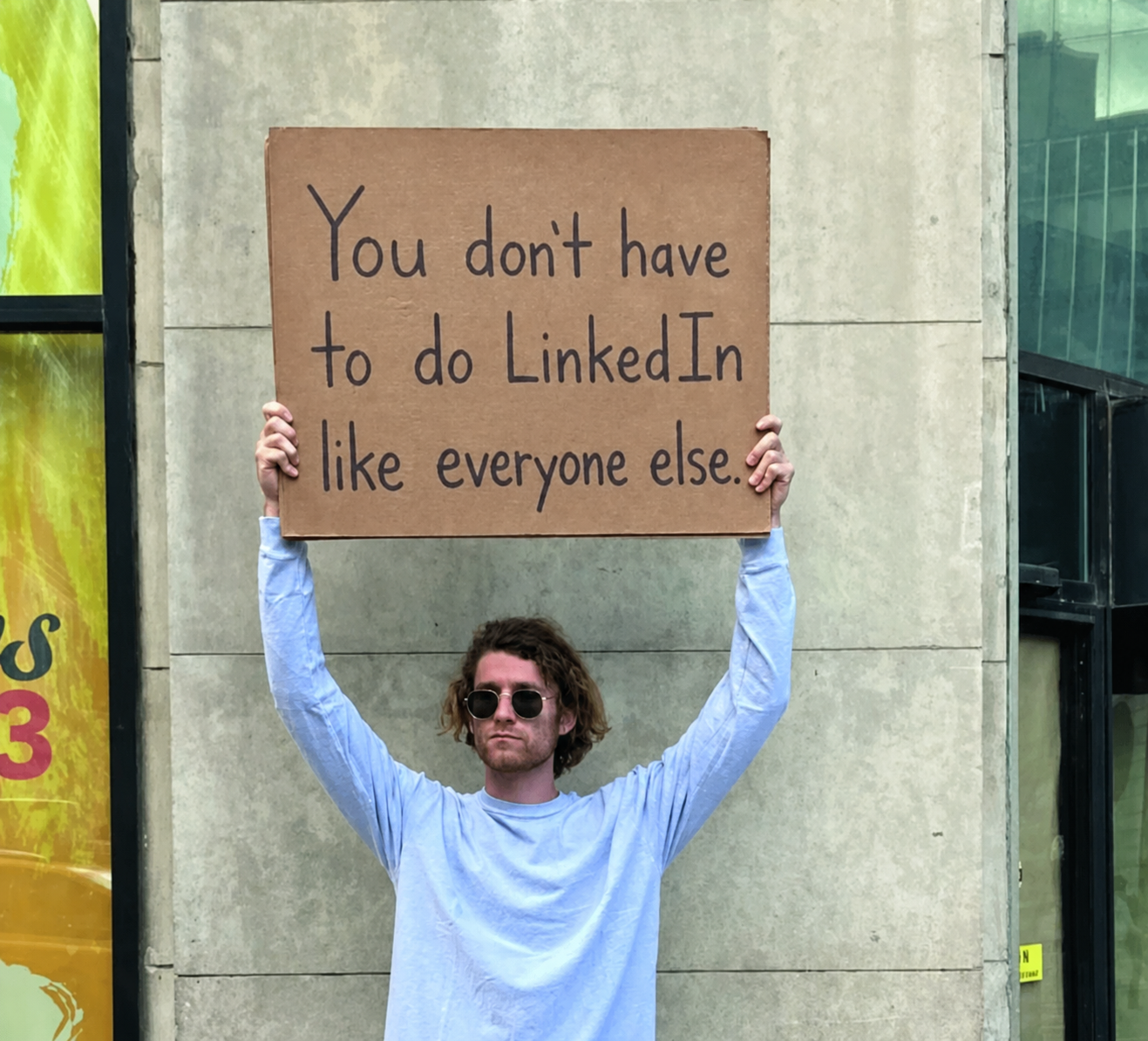
You can't be "good at LinkedIn" unless you're good at engaging with real people live on interesting topics in real life. The content is just the visibility. The engine is the conversation.
The people you keep talking to.
Once you've joined a Visible Work cohort, you're part of the community going forward — as active or as quiet as you want. The only things reserved for each new paying cohort are the live group sessions and 1:1 time with me. The relationships are yours.
Questions people actually ask.
How long is the program?+
How much does it cost?+
How much time do I need each week?+
When do live sessions meet?+
Do I need to be a writer?+
What if I don't know what I want to talk about?+
I have imposter syndrome about posting publicly. Will this fix that?+
How is AI used in the program?+
What happens if I get behind?+
What kind of feedback do you give?+
Do I need to know exactly what my goals are before joining?+
What if the timing isn't right for me?+
Save your seat for the September 14 cohort.
Capped at ~12 people. Applications close Friday, September 11 — kickoff September 14.
Flat tuition for the full 10 weeks. Apply by Friday, September 11 to join the September 14 cohort.
Questions? Reply to the confirmation email — we read every note.